Quick Facts
- Market Movement: Indian equity benchmarks, including the Sensex and Nifty 50, dropped approximately 0.7% following a combined hit from energy shocks and geopolitical trade tensions.
- Bond Yields: The yield on the 6.48% 2035 benchmark government bond climbed to 6.6577%, reflecting increased risk premiums.
- OIS Rates: The one-year Indian Overnight Index Swap (OIS) rate jumped 3.75 basis points to 5.5825%, signaling that the market expects tighter liquidity ahead.
- The Rupee: Despite interventions by the Reserve Bank of India (RBI), the rupee has weakened past 92 per dollar due to a widening trade deficit.
- External Factors: New US trade investigations into 16 major trading partners, including India, have created a climate of uncertainty for export-oriented growth.
The Dual Pressure on Indian Fixed Income
As we move through March 2026, the Indian financial landscape is navigating a period of significant recalibration. For the long-term investor, the recent slide in Indian government bonds (G-Secs) serves as a stark reminder that even the most robust emerging markets are not immune to the "twin pressures" of global commodity volatility and shifting trade diplomacy.
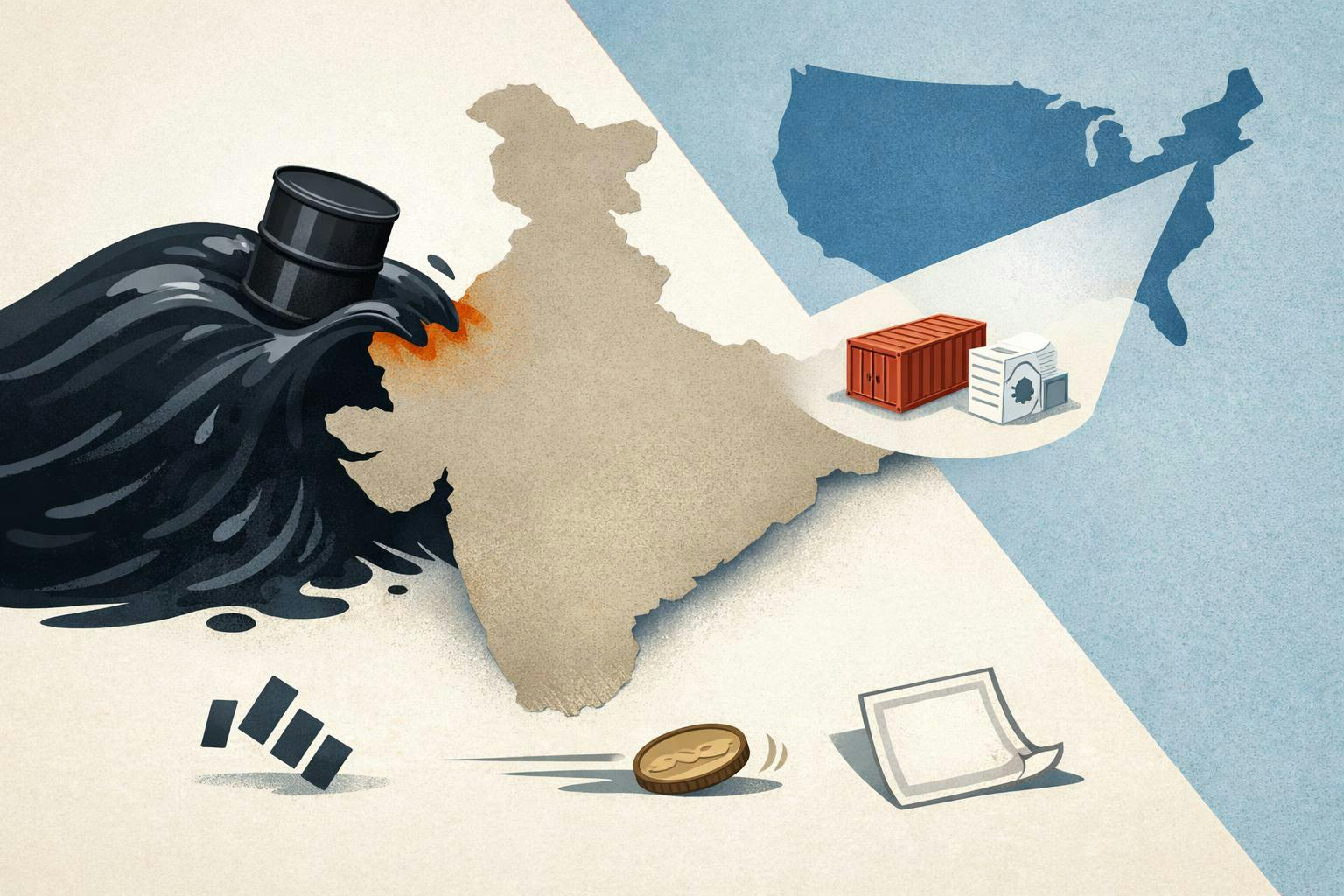
The current volatility isn't just a flash in the pan; it is a calculated reaction by the market to two specific headwinds. First, a surge in global crude oil prices is threatening the domestic inflation trajectory. Second, a fresh round of trade investigations by the United States has targeted several of its key partners, with India featuring prominently on the list. This combination has sent ripples through both the equity and debt markets, with the Sensex and Nifty 50 retreating as investors reassess their risk appetite.
In this environment, "risk-aware" is more than a buzzword—it is a survival strategy. Understanding why these bonds are sliding is the first step toward deciding how to position your portfolio for the remainder of the year.
Why are Indian Government Bonds Sliding?
The decline in Indian government bonds is primarily driven by a "perfect storm" of rising domestic inflation risks and external geopolitical friction. When global crude oil prices rise, India—which imports over 80% of its oil—faces an immediate increase in its import bill. This widens the trade deficit and exerts upward pressure on consumer prices. Because bond prices move inversely to yields, the anticipation of higher inflation (and therefore higher interest rates to combat it) causes bond prices to fall.
Furthermore, the US trade investigations have added a layer of "policy risk." Investors fear that potential tariffs or trade restrictions could slow India's GDP growth, making its debt slightly less attractive in the short term. The result is a sell-off in the 2026 bond market as traders pivot toward more liquid or "safe-haven" assets until the dust settles.
The Energy Factor: Crude Oil, the Rupee, and Inflation
Crude oil remains the single most influential "external shock" for the Indian economy. In March 2026, Brent crude has hovered near 19-month highs, fluctuating in the $84-$120 range. For India, this isn't just an energy problem; it’s a currency and inflation problem.
When oil prices spike, the demand for US dollars by Indian oil marketing companies increases. This naturally puts pressure on the Indian Rupee. Despite consistent smoothing operations by the Reserve Bank of India (RBI), the rupee has recently slipped beyond the 92 per dollar mark. A weaker rupee makes imports even more expensive, creating a vicious cycle known as "imported inflation."
Strategy Note: For portfolio allocators, a weakening rupee typically signals a need to look at export-oriented sectors or dollar-hedged assets. However, in the fixed-income space, it suggests that the "Goldilocks period" of low volatility is taking a backseat to macro-economic reality.
Decoding Fixed-Income Indicators in 2026
To understand where the market is headed, we must look at the "tells" provided by professional traders. Two indicators currently stand out: the 10-year benchmark G-Sec yields and the Overnight Index Swap (OIS) rates.
The 10-year yield is the standard barometer for long-term interest rate expectations. When this yield rises—as we've seen with the 6.48% 2035 bond hitting 6.6577%—it indicates that investors are demanding a higher return to compensate for the risk of inflation eroding their future gains.
Even more telling is the move in the Overnight Index Swap (OIS) market. The OIS reflects the market's view on where the RBI's repo rate will be in the future. The fact that the one-year OIS rate climbed 3.75 basis points to 5.5825% suggests that professional desks are pricing in a "higher-for-longer" interest rate environment.
| Indicator | Value (March 2026) | Trend | Market Sentiment |
|---|---|---|---|
| 10-Year G-Sec Yield | 6.6577% | Rising | Bearish on price; inflation fears |
| 1-Year OIS Rate | 5.5825% | Rising | Expectation of tighter RBI policy |
| USD/INR | 92.10 | Weakening | Concerns over trade deficit |
| Brent Crude | ~$112/bbl | Volatile | Primary driver of fiscal stress |
The RBI’s Balancing Act: Intervention and Liquidity
The Reserve Bank of India is currently walking a tightrope. On one hand, it needs to support the Rupee to prevent runaway inflation; on the other, it must ensure there is enough liquidity in the banking system to support economic growth.
Recent data shows the RBI has been active in the secondary debt market, with net purchases of 560 billion rupees over a recent four-session stretch. This "support buying" is intended to prevent bond yields from spiking too high, too fast. However, this intervention is complicated by the RBI's actions in the forex market. To defend the Rupee, the central bank has sold an estimated $18 billion to $20 billion in foreign reserves. Selling dollars effectively "sucks" rupees out of the system, creating a liquidity drain that the RBI must then refill through bond purchases.
For the investor, this means the RBI is currently the "buyer of last resort," providing a floor for bond prices even as global headwinds push them lower.
Investing Amid Volatility: Best Bonds to Consider in 2026
While the headlines focus on the "slide," a strategic investor looks for entry points. Despite the current turbulence, the fundamentals of the Indian debt market remain structurally sound, bolstered by India’s BBB+ sovereign rating upgrade and its inclusion in major global bond indices like the JPMorgan GBI-EM.
Here is how you should categorize your fixed-income allocation in this high-yield environment:
- Sovereign Gold Bonds & G-Secs: These remain the gold standard for safety. With yields hovering around 6.6%, long-term investors can lock in attractive nominal returns. If you believe inflation will cool by late 2026, buying the dip in G-Secs is a classic "value" play in fixed income.
- Public Sector Undertaking (PSU) Bonds: Bonds issued by government-backed entities often offer a yield "pickup" (extra return) over G-Secs with nearly the same level of perceived safety. During periods of interest rate uncertainty, AAA-rated PSU bonds provide a cushion against volatility.
- Green and Sustainable Bonds: A major trend in 2026 is the explosion of the "Green Bond" market, which is on track to reach $800-900 billion globally. India has become a hub for renewable energy financing, and these bonds often attract a "greenium"—strong demand from institutional investors that can help stabilize prices during market sell-offs.
Navigating Global Trends Affecting Indian Investors
Beyond the immediate oil and trade shocks, several long-term structural shifts are changing how we trade and hold Indian debt.
- Index Inclusion Inflows: The inclusion of Indian bonds in global indices continues to provide a "structural tailwind." Even as local traders sell, global emerging market funds are required to maintain their weightings in Indian debt, which provides a steady stream of passive capital.
- Technology and Accessibility: In 2026, electronic trading platforms and the growth of Online Bond Platform Providers (OBPPs) have made it easier than ever for retail investors to buy fractional units of government bonds. You no longer need millions of rupees to participate in the G-Sec market.
- Fiscal Consolidation: Despite the energy shocks, the Indian government has maintained a disciplined fiscal deficit target. This "fiscal prudence" is what earned the country its rating upgrade and remains the primary reason why a total market collapse is highly unlikely.
Conclusion: The Long-term Outlook
The current slide in Indian government bonds is a classic example of "macro noise" testing the resolve of long-term investors. While rising oil prices and US trade probes are legitimate concerns that justify a short-term price correction, they do not fundamentally break the Indian growth story.
As an editor focused on portfolio strategy, my advice is to view this volatility as a period of financial tightening that will eventually lead to more attractive entry points. For those with a 5-to-10-year horizon, the current yields on G-Secs represent a compelling "real" return once inflation begins to normalize. Keep a close eye on the RBI’s liquidity management and the Brent crude trajectory, but don't let short-term fluctuations distract you from the structural strength of the Indian debt market.
FAQ
Q: Why do bond prices fall when oil prices go up? A: Higher oil prices lead to higher inflation in India. To fight inflation, the central bank is expected to keep interest rates high. Since new bonds will offer these higher rates, existing bonds with lower rates become less valuable, causing their prices to fall.
Q: What is the Overnight Index Swap (OIS) rate, and why should I care? A: The OIS is a contract where investors swap a fixed interest rate for a floating one. It is a leading indicator of where the market thinks the RBI will set interest rates in the future. A rising OIS rate usually means the market expects interest rates to stay high or go even higher.
Q: Is now a good time to buy Indian government bonds? A: For long-term investors, periods of price "slides" often present a buying opportunity to lock in higher yields. However, given the current trade tensions, it may be wise to average into your position rather than investing all at once.
CTA
If you're looking to rebalance your portfolio in light of these market shifts, our 2026 Fixed Income Guide provides a deep dive into the top-rated PSU and Green bonds currently offering a premium over G-Secs.