Quick Facts
- 2026 Macro Outlook: India is projected to maintain a GDP growth rate of 6.5% to 6.8%, with headline inflation firmly anchored below the 4% target.
- RBI Stance: The central bank is expected to prioritize a "neutral" liquidity stance, maintaining an average surplus of 2.5 trillion rupees in the banking system to cushion against global shocks.
- Terminal Rate: Following a cycle of easing in 2025, the repo rate is forecast to settle at a terminal rate of 5.0% by mid-2026.
- Top Fixed Income Picks: Focus on 2-3 year corporate bonds for yield accrual and 7-12 year Indian Government Bonds (IGBs) for tactical duration gains.
- Volatility Anchor: The Weighted Average Call Rate (WACR) is effectively pegged at approximately 5.07%, minimizing the gap with the policy rate and ensuring smooth credit transmission.
For the fixed income investor, 2026 represents a "Transition Year." As the dust settles on the aggressive global tightening cycles of the early 2020s, India’s bond market is emerging not just as a high-yield destination, but as a masterclass in volatility management. The Reserve Bank of India (RBI) has mastered the art of "walking the tightrope," balancing the need for growth-supporting liquidity with the discipline required to keep inflation in its tracks. For those looking to allocate capital, the narrative has shifted from "surviving the storm" to "navigating the calm."
The Macro Narrative: India’s Economy Entering 2026
As we move into 2026, the global economic landscape is undergoing a profound structural shift. We are navigating a new era of trade regimes and supply chain realignments. However, India remains a beacon of relative stability. Our projections suggest a GDP growth trajectory of 6.5% to 6.8%, supported by a rebound in private capital expenditure and steady domestic consumption.
The most critical development for bondholders is the successful anchoring of inflation. After years of battling volatile food prices and imported energy costs, the RBI’s persistence has paid off, with CPI inflation expected to hover consistently below the 4% mark throughout 2026. This "inflation victory" provides the central bank with the necessary room to maneuver, allowing for a pivot from a restrictive stance to a more accommodative, growth-oriented policy.
| Economic Indicator | 2024/25 Actual (Avg) | 2026 Projection | Impact on Bonds |
|---|---|---|---|
| GDP Growth | 7.0% | 6.5% - 6.8% | Neutral/Positive |
| CPI Inflation | 4.8% | 3.8% - 3.9% | Highly Positive |
| Repo Rate | 6.50% | 5.00% | Positive (Rising Prices) |
| INR/USD | 83 - 84 | 89 - 92 | Risk Factor |
The outlook for the Indian bond market in 2026 is decisively positive. The combination of potential interest rate cuts and stable domestic consumption creates a "Goldilocks" environment—not too hot to trigger inflation, not too cold to stall growth. For investors, this translates to falling yields and rising bond prices, offering a rare opportunity for both steady income and capital appreciation.
How RBI Policy Prevents Yield Volatility
Volatility is the enemy of the long-term bond investor. In 2026, the RBI’s primary tool for maintaining market sanity is its sophisticated liquidity management framework. Unlike the blunt instruments of the past, the current strategy is one of surgical precision, often referred to in policy circles as the "Tiptoe Strategy."
By maintaining a banking system liquidity surplus that has averaged approximately 2.5 trillion rupees since early 2024, the RBI ensures that there is enough "money sloshing through the system" to keep credit flowing without triggering an inflationary surge.
The brilliance of the current approach lies in what the RBI doesn't do. The central bank has become increasingly wary of standard Variable Rate Reverse Repo (VRRR) auctions. Why? Because the market often misinterprets these auctions as a signal of monetary tightening. Instead, the RBI has opted for a more nuanced timing of its market operations, using surplus cash to anchor the Weighted Average Call Rate (WACR) at roughly 5.07%.
Stat Check: By keeping the WACR significantly below the projected 5.25% - 5.00% repo rate corridor, the RBI effectively lowers the floor for market yields, preventing the "yield spikes" that typically occur during periods of global uncertainty.
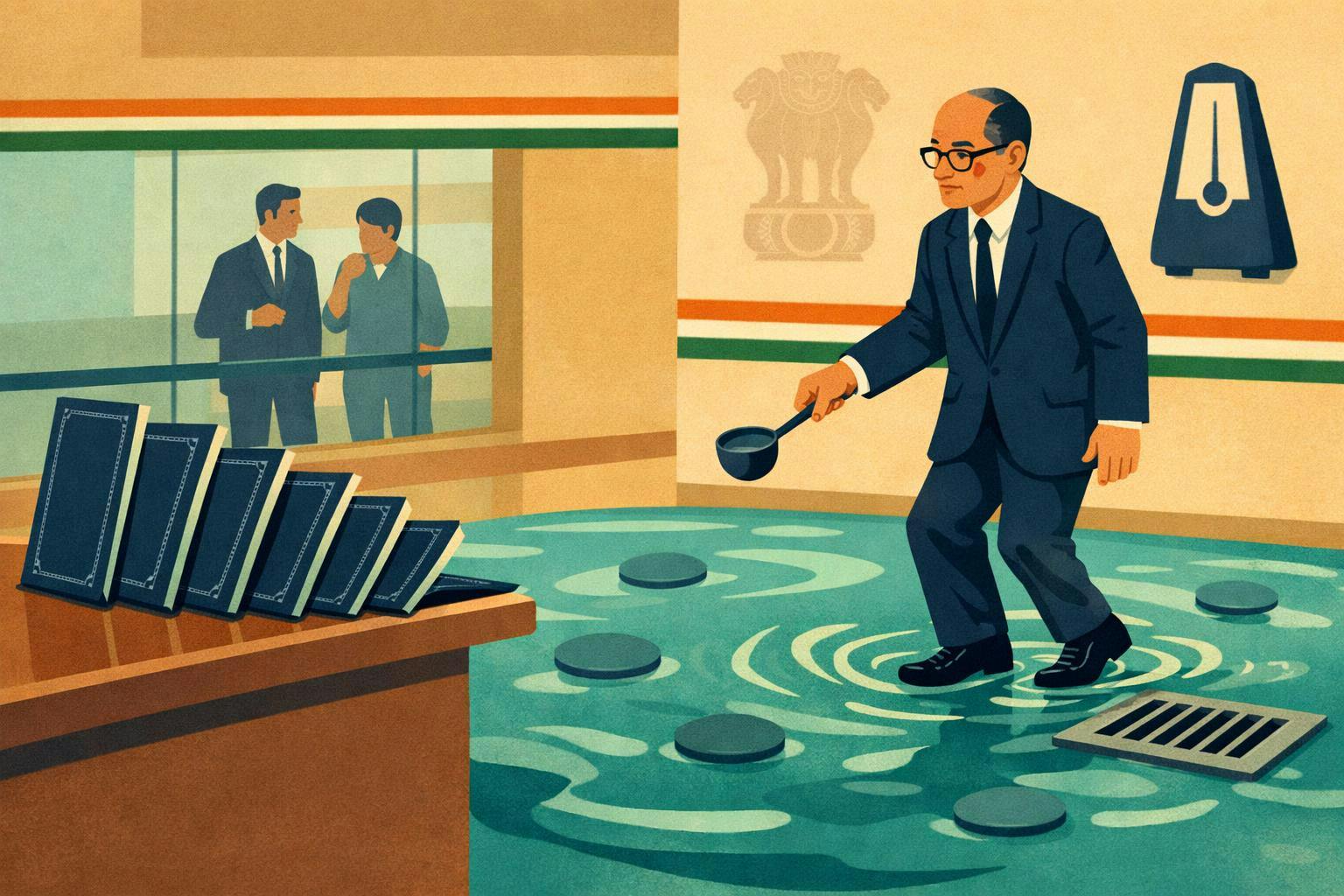
This strategy serves as a shock absorber. When global markets react to shifting US trade policies or geopolitical tensions in Eastern Europe or the Middle East, the domestic liquidity cushion prevents those tremors from turning into an earthquake in the Indian G-Sec (Government Securities) market.
The Interest Rate Trajectory: Settlement at 5%?
To understand 2026, we must look back at the "easing era" of 2025. Throughout that year, the RBI implemented a total of 125 basis points (bps) in rate cuts, responding to the cooling global economy and domestic inflation success. As we enter the first half of 2026, we anticipate the final leg of this easing cycle.
Market consensus points toward a final 25bps cut in either February or April 2026, bringing the terminal repo rate to 5%. This level represents a "neutral" rate that supports the government's borrowing needs while remaining high enough to protect the Rupee.
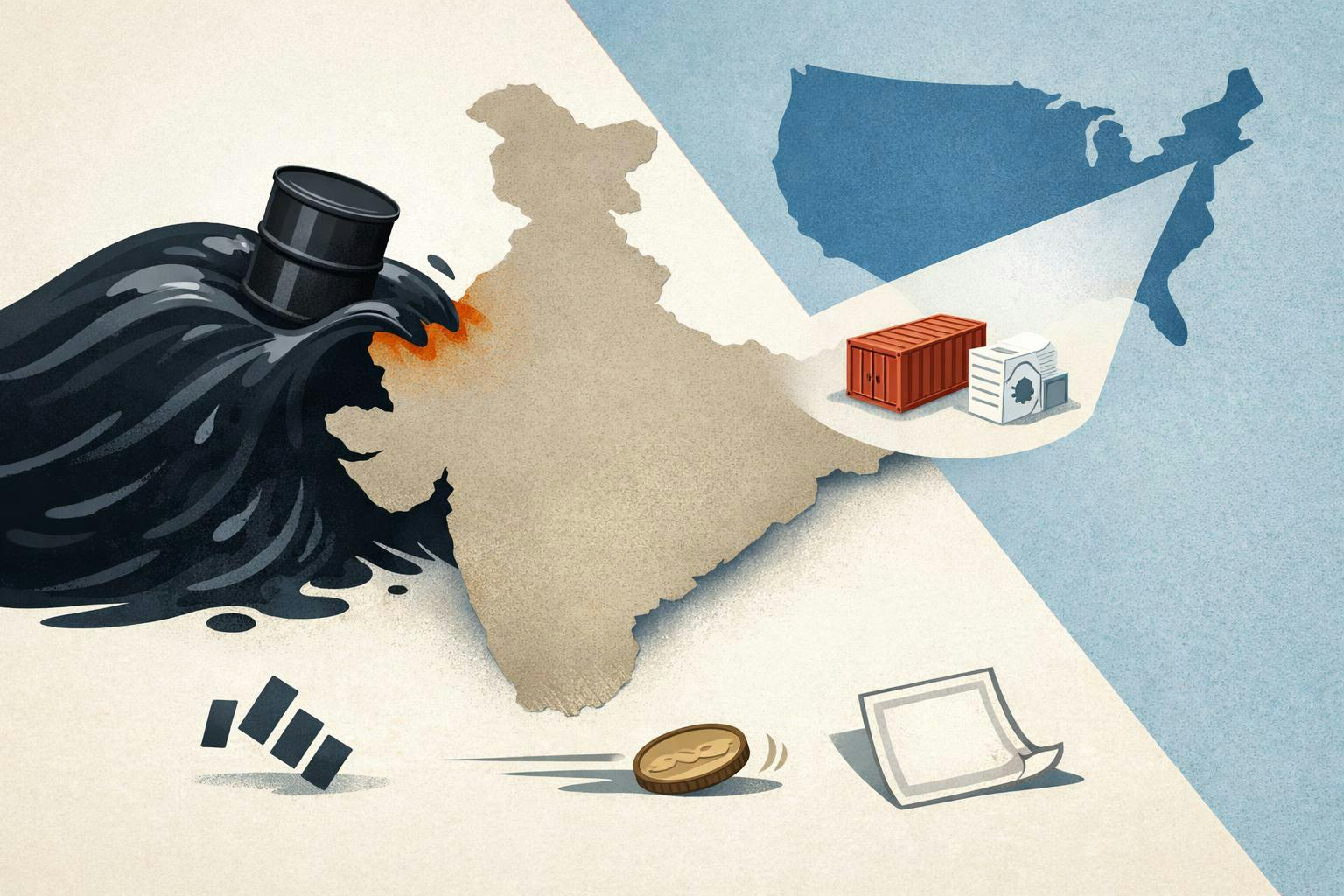
However, the currency remains the "joker in the pack." The Rupee (INR) is expected to face pressure, likely trading between 89 and 92 per dollar. The primary driver here isn't domestic weakness, but rather the evolving US-India trade dynamics and the strength of the US Dollar in a new tariff-heavy global environment. The RBI will likely use its massive foreign exchange reserves to ensure that any depreciation is "orderly" rather than "chaotic," further protecting bond yields from currency-induced volatility.
Investment Playbook: The 'Nimble-Footed' Strategy
In an environment where rates are settling at their floor, the strategy must evolve. The "easy money" from the initial rate cuts of 2025 has been made. For 2026, I recommend what we call a 'Nimble-Footed' Strategy. This means shifting the focus from pure duration (betting on falling rates) to a heavy emphasis on accrual (earning the interest), combined with tactical duration shifts.
Top Picks for 2026
- 2-3 Year Corporate Bonds: As the economy stabilizes, corporate spreads often widen slightly compared to government bonds. High-quality (AAA/AA+) corporate paper in the 2-3 year segment offers an attractive "yield pick-up" over G-Secs with minimal interest rate risk.
- 7-12 Year Indian Government Bonds (IGBs): This is the "sweet spot" for duration. This segment is the primary target for the RBI’s Open Market Operations (OMO) and remains the most liquid part of the curve. It allows investors to capture "Alpha" as the yield curve flattens.
- Tactical 30-40 Year Segment: For the sophisticated investor with a high risk-appetite, the ultra-long end of the curve offers significant capital gains potential if the Bloomberg Global Aggregate Index inclusion leads to higher-than-expected foreign inflows.
| Bond Category | Credit Rating | Ideal Duration | Why Buy? |
|---|---|---|---|
| PSU/AAA Corporates | High (AAA) | 2 - 3 Years | Best for stable accrual income. |
| IGBs (Sovereign) | Sovereign | 7 - 12 Years | Tactical duration and high liquidity. |
| AA/AA- Corporates | Medium | 1 - 2 Years | Higher yields for those with risk appetite. |
The core of this strategy is balance. By spreading your allocation between short-term corporate debt and medium-term government securities, you capture high immediate income while leaving the door open for capital gains if the RBI cuts rates more aggressively than forecasted.
Risks and the 'Joker in the Pack'
No outlook is complete without acknowledging the "known unknowns." While the domestic picture is bright, external risks remain the primary threat to the 2026 bond market.
- The Tariff Headwinds: Effective global tariffs are projected to average between 14% and 35% by 2026. While India is less export-dependent than some of its neighbors, the secondary impact on global growth could cause "risk-off" sentiment, leading to temporary FPI (Foreign Portfolio Investment) outflows from the Indian bond market.
- Weather-Linked Inflation: Despite the structural improvements, Indian inflation remains sensitive to the monsoon and food supply chains. A significant weather event could force the RBI to pause its liquidity support, leading to temporary yield spikes.
- The Upside Catalyst: The "Joker" that could drive yields even lower is the full inclusion of India in major global bond indices. We expect this to drive an additional $15-20 billion in FPI inflows in 2026, creating a strong floor for bond prices and potentially pushing the 10-year G-Sec yield below the 6% mark.
Active Portfolio Building: Step-by-Step
Building a resilient portfolio for 2026 requires a disciplined approach. Follow these four steps to optimize your fixed-income allocation:
Step 1: Define Your Return Appetite Are you seeking "Income" (steady checks) or "Stability" (wealth preservation)? In a 5% terminal rate environment, income-focused investors should lean more heavily into 3-year AAA corporate bonds, which typically yield 100-150 bps above the repo rate.
Step 2: Study Interest-Rate Cycles We are currently in the "Late Easing" stage. This is not the time to be "all-in" on long-duration bonds. Instead, use a "laddering" technique—buying bonds with different maturity dates to ensure that you always have liquidity to reinvest as the market fluctuates.
Step 3: Diversification Across the Spectrum Don't put all your eggs in one basket. A balanced 2026 portfolio should look something like this:
- 40% Indian Government Securities (7-12 year)
- 40% AAA-rated Corporate/PSU Bonds (2-3 year)
- 20% Short-term Liquid Funds or Floating-rate Bonds (to hedge against unexpected inflation).
Step 4: Monitoring the Signals Keep a close eye on two specific indicators: the monthly CPI inflation prints and the RBI’s commentary on "liquidity withdrawal." If the RBI begins to mention "tightening liquidity" more frequently, it may be time to shorten your duration.
FAQ
Q: Will the RBI hike rates in 2026 if the US Federal Reserve remains hawkish? A: It is unlikely. The RBI has demonstrated significant "strategic autonomy." With domestic inflation under 4%, the RBI is more likely to use its foreign exchange reserves to manage the Rupee rather than hurting domestic growth with a rate hike to match the Fed.
Q: Is it safe for retail investors to buy long-term (10+ year) bonds now? A: While safe from a credit perspective, long-term bonds carry high "interest rate risk." If you need the money in 2-3 years, avoid long-dated bonds. If you are a long-term investor, these bonds offer a great way to "lock in" current yields before they fall further.
Q: How do the new global tariffs affect my bond portfolio? A: Tariffs generally lead to higher global inflation and slower growth. For India, the primary risk is currency volatility. However, since the RBI maintains a high liquidity surplus, the impact on domestic bond yields should be contained.
The 2026 bond market is one of discipline and tactical maneuvering. By following the RBI's lead and staying "nimble-footed," investors can turn a period of global transition into a cornerstone of their long-term wealth strategy. Keep your eyes on the liquidity, but keep your heart in the accruals.