Quick Facts
- The Event: Total closure of the Strait of Hormuz in March 2026, removing approximately 21 million barrels of oil per day from the global market.
- The Price Shock: Brent crude surged by 6% to reach $97 per barrel within days, with some spot prices crossing the $100 mark.
- The Yield Surge: Markets reacted by pushing the German 10-year government bond yield to 2.93% and the US 10-year Treasury yield to 4.14%.
- The Policy Shift: Anticipated interest rate cuts previously scheduled for June 2026 have been pushed back to December 2026 or early 2027 as central banks pivot to fight energy-led inflation.
- The Investor Impact: Significant rotation out of rate-sensitive sectors like regional banks and into "energy-defensive" equities and short-term liquid havens.
Investors entered March 2026 with a sense of cautious optimism. The narrative was simple: inflation was cooling, and central banks were preparing to deliver a series of much-anticipated interest rate cuts. That narrative evaporated almost overnight. The sudden and total disruption of oil supplies through the Strait of Hormuz has forced a violent repricing of risk across every asset class.
For long-term investors, the primary concern isn't just the price at the pump; it is the "higher-for-longer" interest rate environment that has been resurrected by this energy shock. When energy prices spike, they act as a tax on the global economy, fueling persistent inflation that ties the hands of the Federal Reserve and the European Central Bank (ECB).
The 2026 Black Swan: The Strait of Hormuz Shutdown
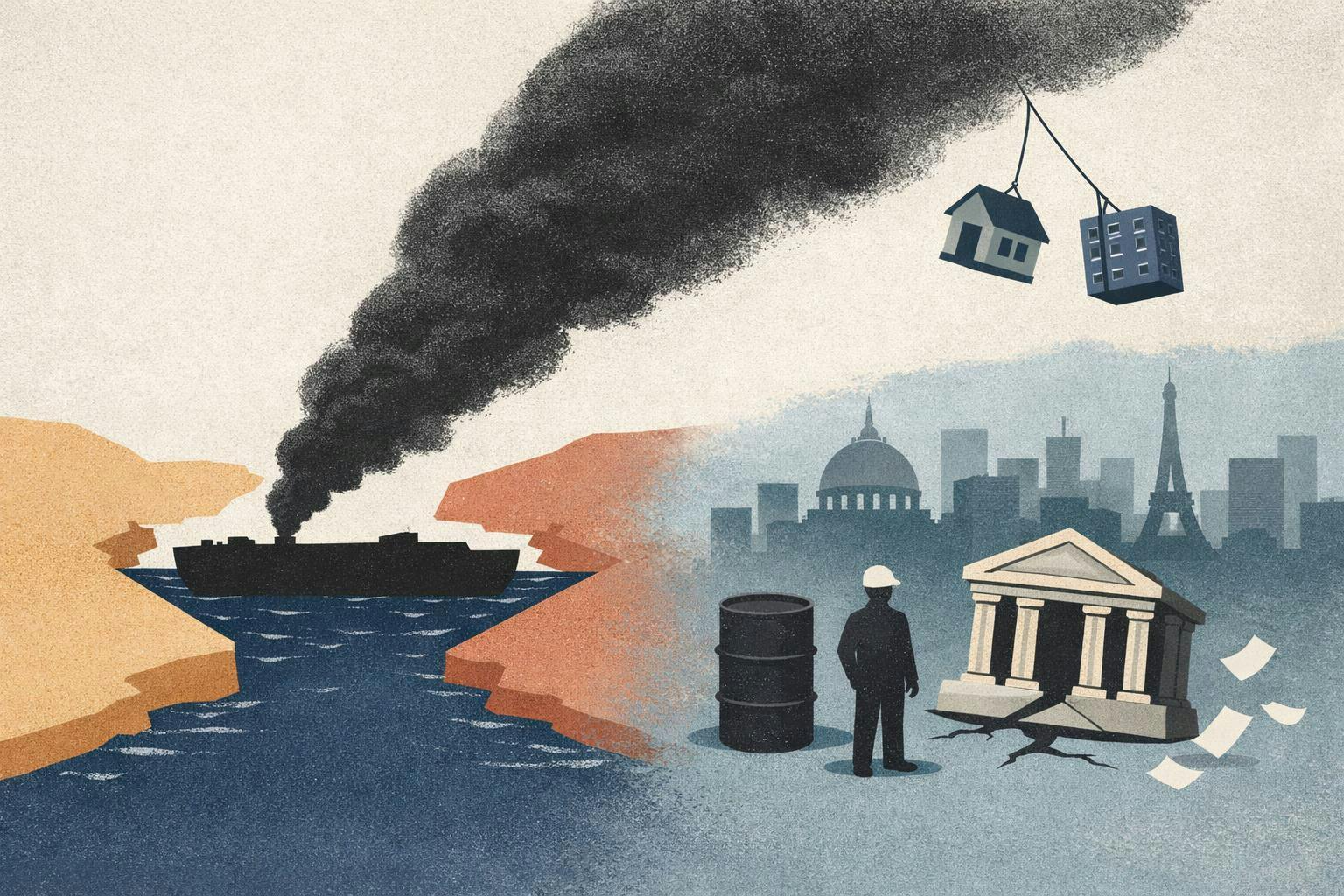
The Strait of Hormuz is arguably the most critical maritime chokepoint in the world, a narrow gateway through which 20% of the world’s daily petroleum consumption passes. When this gateway closed in March 2026, the impact was immediate. We saw Brent crude prices jump by roughly 6%, settling at a staggering $97 per barrel. This wasn't a slow climb; it was a vertical leap that caught the global supply chain completely off guard.
The removal of 21 million barrels of oil per day from circulation created an instantaneous deficit. While the United States and other IEA members have tapped into their Strategic Petroleum Reserves (SPR), the market remains skeptical. The math simply doesn't add up for a quick fix. An SPR release can cushion the blow, but it cannot replace the sheer volume of lost Middle Eastern crude. As a result, the "supply-side shock" has become the dominant driver of global macro policy, overriding the "soft landing" hopes that dominated the early part of the year.
The Inflationary Domino Effect
Central banks like the Federal Reserve have a dual mandate, but in times of crisis, price stability becomes the "north star." The 6% jump in Brent crude is expected to add at least 0.75 percentage points to headline inflation globally. For an economy that was barely touching the 2% target, this surge is a catastrophe.
When energy prices rise, the cost of everything else follows—from the fuel used to ship consumer electronics to the electricity needed to run data centers. This "second-round effect" is what keeps central bankers awake at night. If they cut interest rates now, they risk de-anchoring inflation expectations, potentially leading to a 1970s-style wage-price spiral.
Consequently, the market has performed a massive U-turn. In February, futures markets were pricing in a 75% chance of a rate cut in June. Today, those odds have plummeted to near zero. Most analysts, including our team, now expect the first cut to be deferred until December 2026 at the earliest. We are effectively in a holding pattern where the "cost of money" will remain high until the "cost of energy" stabilizes.
The Bond Market's Warning: Rising Treasury Yields
The bond market is often called the "smart money," and right now, it is signaling a period of prolonged volatility. As oil prices climbed, we saw a corresponding surge in government bond yields. The US 10-year Treasury yield rose 20 basis points to hit 4.14%, while in Europe, the German 10-year yield climbed to roughly 2.93%.
Why do yields rise when oil goes up? It's a combination of two factors:
- Inflation Expectations: Investors demand a higher yield to compensate for the eroding purchasing power of future coupon payments.
- Fiscal Anxiety: Markets are beginning to price in the prospect of expensive military or diplomatic efforts to reopen the Strait, which would increase government deficits and require more bond issuance.
This tightening of financial conditions is happening without the Fed even moving a finger. Higher yields mean higher mortgage rates for households and higher borrowing costs for corporations. In essence, the oil shock is doing the central bank’s job of "cooling" the economy, but in the most painful way possible.
Real-Time Market Indicators (March 2026)
| Asset Class | Pre-Disruption (Feb 2026) | Current (March 2026) | Change |
|---|---|---|---|
| Brent Crude Oil | $84.00 | $97.00 | +15.5% |
| US 10-Year Treasury | 3.85% | 4.14% | +29 bps |
| German 10-Year Bund | 2.45% | 2.93% | +48 bps |
| S&P 500 Index | 5,400 | 5,120 | -5.2% |
| Gold (Spot) | $2,150 | $2,380 | +10.7% |
Stock Market Rotation: Winners and Losers
The equity markets have responded with a sharp rotation. The sectors that were expected to thrive under lower interest rates—such as technology, real estate, and regional banks—are now facing significant margin compression. Banks, in particular, are being hit by a "double whammy": their cost of funding is staying high, while the value of their long-dated bond holdings is falling as yields rise.
Conversely, we are seeing a flight to "defensive energy." Integrated oil majors and energy infrastructure companies are the primary beneficiaries. Even as broader indices like the S&P 500 or the Euro Stoxx 50 retreat, the energy sector is acting as a crucial hedge for diversified portfolios.
In the alternative asset space, Bitcoin has provided a fascinating case study. Despite its reputation among some as "digital gold," it has behaved largely as a "risk-on" asset during this crisis. As liquidity tightens and yields rise, Bitcoin has faced downward pressure alongside tech stocks, proving that in a true energy-driven liquidity crunch, cash and physical gold are still the kings of the "safe haven" mountain.
Investor Playbook: Protecting Your Wealth in March 2026
When the macro landscape changes this abruptly, your strategy must evolve. This isn't about panic selling; it's about re-aligning your portfolio to the new reality of 2026.
- Underweight Logistics and Consumer Discretionary: These sectors are most vulnerable to fuel surcharges and reduced consumer spending power. If you are holding heavy positions in airlines or global shipping fleets, it may be time to trim exposure.
- Move to "Liquid Safe Havens": Cash is no longer "trash" when yields are over 4% and the outlook is uncertain. Increasing your allocation to short-term Treasuries (1-3 year duration) allows you to capture high yields with minimal interest rate risk.
- Re-evaluate Duration: If you were "long duration" (holding 20+ year bonds) in anticipation of rate cuts, you are likely sitting on losses. Shifting to a "neutral" duration posture is a more prudent way to manage the symmetric risks of inflation versus recession.
- Physical Gold as a Geopolitical Hedge: Unlike Bitcoin, gold has maintained its inverse correlation with real yields during this specific crisis, acting as a true store of value as Middle Eastern tensions escalate.
Pro Tip: Watch the "Break-even Inflation" rates. If these continue to climb despite the rise in nominal yields, it suggests the market believes the Fed is "behind the curve." In that scenario, even higher yields—and more delayed rate cuts—are a certainty.
Frequently Asked Questions (FAQs)
What is the Strait of Hormuz Oil Supply Disruption 2026?
It refers to the March 2026 closure of the world’s most vital oil transit point. This event blocked the passage of roughly 21 million barrels of oil per day, leading to a global energy shortage and a sharp spike in Brent crude prices to $97 per barrel.
Why do rising oil prices prevent the Fed from cutting rates?
Rising oil prices increase the cost of production and transportation, which leads to higher prices for consumer goods (inflation). The Federal Reserve cannot cut interest rates while inflation is rising, as lower rates would further stimulate demand and potentially lead to out-of-control price increases.
How high could oil prices go if the blockade continues?
Market analysts suggest that if the Strait remains closed for more than a fiscal quarter, Brent crude could test the $120-$140 range. However, this depends heavily on the success of diplomatic efforts and the ability of other producers like Saudi Arabia to utilize bypass pipelines.
Conclusion
The events of March 2026 serve as a stark reminder that the path to economic "normalcy" is rarely linear. While we all hoped for a year of steady rate cuts and easing conditions, the reality of global supply chains and geopolitical volatility has intervened.
For the disciplined investor, the key is to stay liquid and stay informed. The delay in interest rate cuts is a significant hurdle, but it also provides an opportunity to lock in higher yields in safe-haven assets while waiting for the energy market to reach a new equilibrium. Monitor the headlines, but keep your eyes on the yields—they will tell you when the worst of the "Strait of Hormuz shock" has finally passed.